


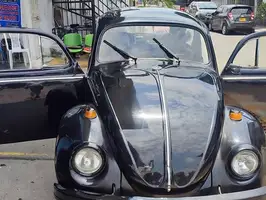

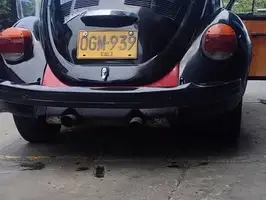

Performance Specifications

MPG
24,00 city / 28,00 hwy

Drivetrain
RWD

Fuel Type
GAS

Exterior Color
GRAY

Interior
UNKNOWN

Seating
None

Engine
UNKNOWN

Transmission
MANUAL
Value Compass™
buen estado modelo 74 papeles hasta diciembre
Vehicle History



Overview
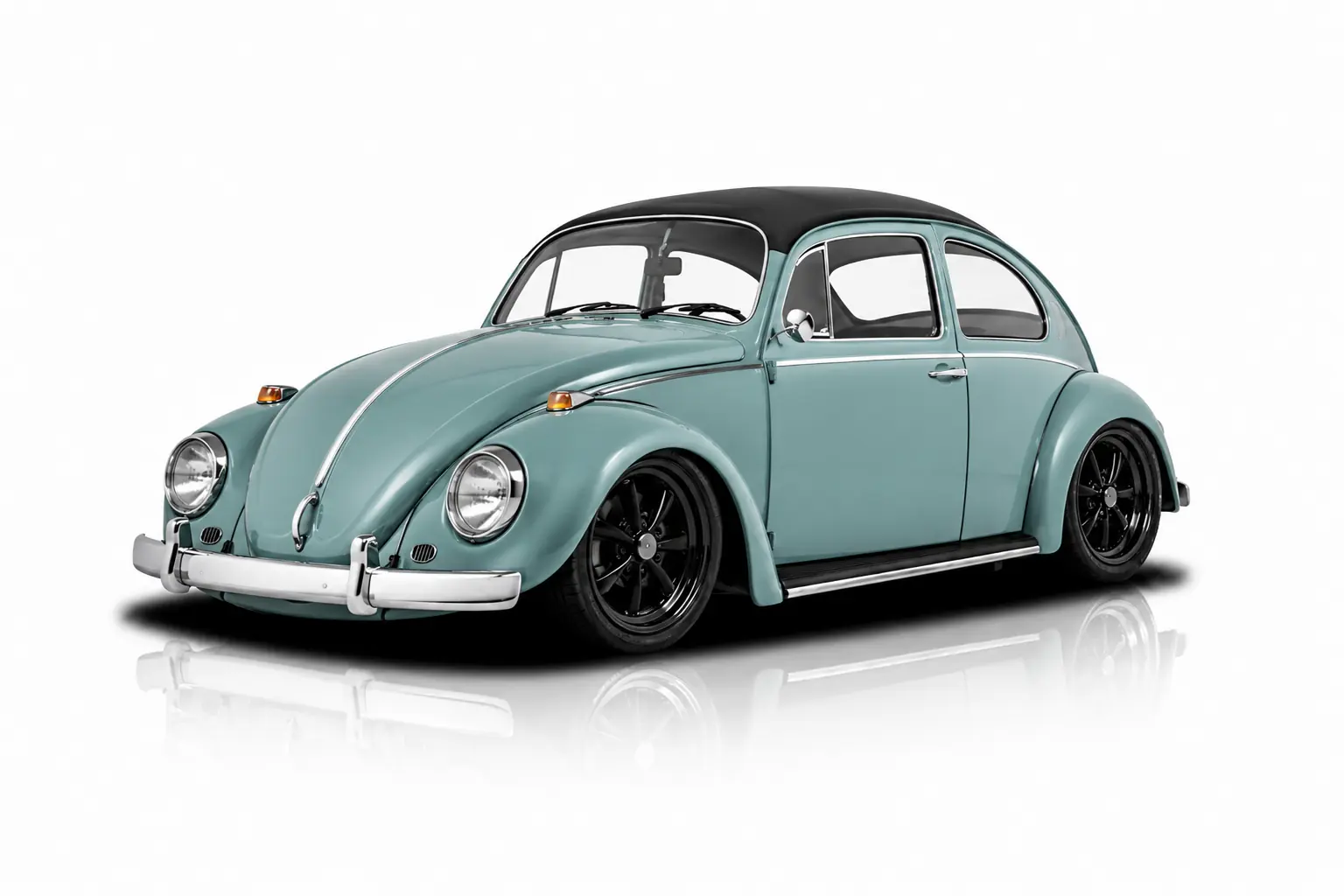
volkswagen escarabajo 1974 — what you’re actually dealing with
A 1974 Volkswagen Escarabajo is not a “classic experience.” It’s a 50-year-old machine built around a design that was already old when this model rolled out. By 1974, the platform had been pushed as far as it could go without a full redesign. What you’re buying is simple, mechanical, and limited.
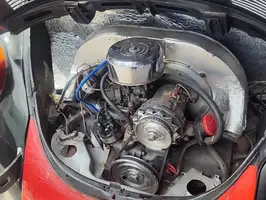
Most 1974 models came with a 1600cc dual-port engine. Some markets still had 1300cc versions, but the 1600 is what shows up most in Colombia and Mexico. Power sits around 46–50 horsepower. That’s it. No hidden reserve.
The layout is rear-engine, air-cooled, rear-wheel drive. No radiator. No coolant. Cooling depends on a belt-driven fan and intact engine tin. If that system is incomplete, the engine cooks itself. Fast.
engine and mechanical reality
The 1600 dual-port is the standard reference point here.
Basic specs:
- 1584cc flat-four
- Around 48 hp at roughly 4,000 rpm
- Torque in the high 70 lb-ft range
- Single carburetor, usually a Solex 34 PICT series
- 4-speed manual transmission
It’s not quick. It’s not smooth compared to modern engines. But it’s accessible. You can adjust valves with basic tools in your driveway.
That simplicity comes with responsibility. Valve lash needs adjustment every 5,000–8,000 km. Skip that, and you burn valves. Oil changes happen every 3,000 km because there’s no full-flow oil filter in stock form. Just a mesh screen.
A real case: a 1974 Escarabajo in Envigado ran 10,000 km without a valve adjustment. Exhaust valve tightened up, overheated, lost compression on cylinder #3. Engine didn’t explode. It just got weaker until it needed a top-end rebuild. That’s how these fail. Slowly, then expensively.
driving behavior in real conditions
This car operates at its limit most of the time.
City driving is fine. Speeds under 60 km/h suit it. The engine doesn’t struggle, steering is manageable, and the narrow body helps in tight streets.
Highway driving exposes the limits.
- 80–90 km/h feels stable
- 100 km/h starts to feel light in the front
- Above that, crosswinds push it around
Acceleration is slow. 0–100 km/h can take 20+ seconds depending on altitude and condition. In places like Medellín or Bogotá, thinner air reduces power even more.
You don’t “merge confidently.” You wait for space.
Braking is basic. Front discs were introduced in many markets by the early ’70s, but rears stayed drums. If the drums aren’t adjusted evenly, the car pulls under braking. That’s not rare. That’s common.
suspension, steering, and road feel
Front suspension uses torsion bars. Rear uses swing axle or IRS depending on the exact configuration and market.
1974 is a transition period. Some cars still had swing axles, others had IRS (independent rear suspension). IRS is more stable in corners. Swing axle cars can tuck under hard cornering if pushed. That’s not theory. It happens.
Steering is unassisted. At low speeds, it’s heavy. At speed, it’s loose but predictable if components are tight.
Worn bushings and steering boxes introduce play. A lot of these cars have never had a proper front-end rebuild, so steering slop is normal unless corrected.
interior and daily usability
This is where expectations need to be reset.
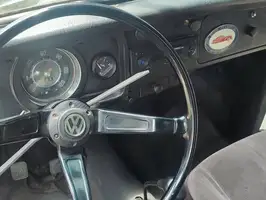
Interior is minimal:
- Flat seats with basic padding
- Vinyl upholstery in most cases
- Simple dash with a speedometer and warning lights
- No tachometer unless added
Noise level is high. Engine sits right behind you. At 80 km/h, conversation requires raised voices.
Heating system depends on exhaust heat exchangers. If those are rusted or missing, heat doesn’t exist. Worse, bad seals let exhaust fumes into the cabin.
A real example: a 1974 in Cali had patched heater channels and missing seals. Driver reported headaches after longer drives. CO exposure isn’t theoretical in these cars. It happens when the system is compromised.
No factory air conditioning in most markets. Aftermarket kits exist, but they add load to an already weak engine.
reliability — the truth, not the myth
These cars don’t fail less. They fail differently.
There are fewer systems, so each one matters more.
Common issues:
- Oil leaks from pushrod tubes and crank seals
- Carburetor wear leading to rough idle and poor fuel economy
- Ignition points wearing out (unless converted to electronic ignition)
- Clutch cable snapping without warning
- Generator or alternator failure
None of these are rare. They’re part of ownership.
What keeps the car running is constant small maintenance, not durability in the modern sense.
If you maintain it, it runs. If you ignore it, it degrades quickly.
fuel consumption and real costs
Fuel economy sits around:
- 9–12 km/L depending on tuning and driving
Carbureted engines drift out of tune. A slightly rich mixture drops mileage fast.
Fuel lines and seals need updating if running modern ethanol-blended fuel. Original rubber components degrade.
Maintenance costs stay low per job, but frequency adds up.
Typical annual spend for a regularly driven car:
- $600–$1,200 USD equivalent
That includes:
- Oil changes
- Brake work
- Minor part replacements
Major work like engine rebuilds adds another $800–$1,500 depending on parts and labor.
rust and structural problems
Rust decides whether the car is worth owning.
Critical areas:
- Floor pans under the carpet
- Heater channels along the sides
- Frame head (front suspension mount)
- Rear torsion housing
These aren’t cosmetic. They’re structural.
A clean-looking exterior doesn’t mean anything. Paint hides bad repairs.
Example: a 1974 Escarabajo sold in Pereira had fresh paint and new upholstery. Underneath, the floor pans were patched with thin metal sheets pop-riveted in place. No welding. That car flexed over bumps. It wasn’t safe.
Proper rust repair involves cutting out sections and welding new metal. That costs more than most buyers expect.
parts availability and quality
Parts are easy to find in Latin America. That’s one of the few consistent advantages.
You can buy:
- Engine rebuild kits
- Carburetors and rebuild parts
- Brake components
- Suspension parts
Prices are low:
- Carb rebuild kit: $20–$50
- Clutch kit: $120–$200
- Brake shoes: $30–$70
The problem is quality.
Cheap aftermarket parts fail early. A low-cost carburetor might run poorly out of the box. Rubber components crack within months if they’re low grade.
You end up replacing the same part twice if you buy the cheapest option.
modification potential
The 1974 platform responds well to modifications because it’s simple.
Common upgrades:
- 1776cc or 1915cc engine builds
- Dual carb setups
- Header exhaust systems
- Suspension changes for Baja-style builds
A 1776cc build with dual carbs can push power into the 70–90 hp range. That changes drivability.
But more power adds heat. Cooling system must be complete and well-sealed. Cheap builds overheat.
Stock transmissions don’t like aggressive driving with higher power. Clutches wear faster.
Done correctly, upgrades improve the car. Done cheaply, they shorten its lifespan.
real ownership example
1974 Escarabajo used daily in Medellín.
Usage:
- 20 km per day average
- Mixed city driving
Repairs over 12 months:
- Clutch cable replaced twice
- Front brake pads and rear shoes replaced
- Carburetor rebuilt once
- Valve adjustments every two months
Total cost: around $900 USD equivalent for the year.
Downtime: about 10–15 days total across small repairs.
The car never completely failed. It just needed constant attention.
what this car actually is
A 1974 Volkswagen Escarabajo is a basic, mechanical car that survives because it’s easy to keep running, not because it’s durable in the modern sense.
It works if you stay on top of maintenance. It doesn’t tolerate neglect.
It’s slow. It’s exposed in traffic. It demands attention.
That’s the trade.
Common Questions About This Vehicle
Other Cars You Might Like

Vehicle Specifications
History and Inspection
- Desconocido accidents✓
- Desconocido open recalls found✓
- One owner✓
- Not stolen Not previously stolen✓
- View full Carfax report